An Inquiry on the Ornament
Details
Jan 16 2026 to Jan 25 2026 10 a.m.
EVENT HAS ENDED
Where
Sabha Blr
No.44/A, Kamaraj Road, Bharati Nagar, Shivaji Nagar, Bengaluru 560042
Event Description
An Inquiry on the Ornament is a site-specific sculptural installation that contemplates contextual narratives that contemporary architectural ornaments can embody. Rooted in archives of ornamentation on facades of buildings as evidence of migration, invasions, revolutions, reverence, power, and their existence today as monuments or ruins, Singh’s project considers whether the personal can decolonise the reliance on appropriative or aspirational narratives in design.
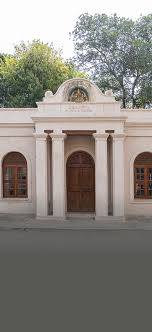
While examining global sites of governance and/or ports with colonial pasts, the first response in this project is an engagement with Sabha BLR’s facade through conversations with people who work and live at or near it, in relation to its distinct history. Sabha is housed in a 160-year-old heritage building that once served as a school, but was abandoned over the past decade. Located on Kamaraj Road, the site was restored in 2020, and is surrounded by neighbourhoods that people have migrated to from various adjoining states since the 19th century, when this locality was formed, with the establishment of the British Cantonment.
Through personal objects of care and preservation, the artwork is imbued with memories that people carry with them, or keep close as reminders of a person, place or moment in time. The forms contained within the new ornaments were once worn as totems of protection, held as vessels of human connection, or treasured as reminders of unfulfilled desires.
During the research process, Singh conversed with seven women - Alia, Anuda, Bharati, Dr Subadra, Kalavati, Lakshmi, and Puja – whose lives have intersected with Kamaraj Road in different ways. Alia grew up near Kammanahalli, moved to Shivaji Nagar for her children, and works at a clothing store on Commercial Street. Anuda runs a bajji (fritters) stall near Sabha and lives with her children and grandchildren. Bharati moved from Tamil Nadu and settled on Kamaraj Road once her husband retired from the army. Kalavati worked at a bakery outside of Sabha, which she left within the duration of the project; she lives in Hennur. Lakshmi grew up in Bengaluru and moved to Kamaraj Road to live with her husband and in-laws, after marriage. Puja works with children at Sabha every Saturday; she grew up in Jalahalli and interacts with the entire city as part of her work. Dr Subadra grew up on Kamaraj Road, as her grandfather built the RBANM trust; she retired as principal of a science college in HSR layout. Using the ornaments and stories of these seven women, Singh connects her conversations with the residents of the neighbourhood to the evolving architecture and landscape of the city.
Throughout our country’s history, architectural ornament has served as a marker of identity and culture, but contemporary architecture has shifted dramatically toward minimalism, replacing traditional forms with steel, glass and mirrors. In response, Singh’s project intentionally breaks from the conventional rules of ornament—its placement, geometry and prescribed order—to imagine new forms rooted in lived experience, rather than architectural tradition.
Conversations on migration in Bengaluru are frequent, often focusing on IT professionals who move in search of better opportunities. In contrast, this project offers a counter-narrative by highlighting the informal economies embodied in the everyday triumphs of the seven women whose lives intersect with Sabha BLR. By linking architectural language to the longstanding dismissal of women’s contributions in both public and private spaces, Singh centres their stories, memories, and cherished objects as the defining layers of her work. Does the city still remember its past monuments, their ornate design histories, and the people who inhabited them? By excavating the histories of buildings and their immaterial connections, Singh develops a visual language between how we remember and create a more shared urban present.
PRESENTED BY:
Kala Hubba represents the visual arts programme of BLR Hubba. It engages with Bengaluru’s public spaces, beginning with Freedom Park—once the city’s jail, now reimagined as a place for public protest, leisure, play and so much more, bringing people together across gender, class, language, and religion. The objective is to connect with people in areas they have ownership over, through artworks that respond to the architecture of these sites and the needs of the community.
A meticulously restored 160-year-old Tamil school gave birth to Sabha BLR, now a vibrant cultural space in the heart of Bengaluru. The building was part of RBANM's Educational Charities, established in 1873 by Dharmarathnakara Rai Bahadur Arcot Narrainsawmy Mudaliar. For over a century, RBANMS has played a vital role in shaping Bengaluru's educational landscape, emphasising access, inclusivity, and empowerment. The building was restored in 2020 by Ammini Trust to continue the tradition of learning, and Sabha carries forward a vision of education, community building, and cultural enrichment. The name Sabha refers to a gathering, and its logo symbolises a meeting of minds where each letter forms a person, unique and diverse, coming together to debate, share, and celebrate.
As Bengaluru grows into a metropolis shaped by diverse migrations and shifting communities, Sabha responds with an inclusive platform where artists, thinkers, and neighbourhoods merge. Sabha runs a volunteer initiative program that is free for children of the neighbourhood. Every Saturday, they engage with arts and crafts to create something meaningful to them. RBANM Trust had also started one of the first girl’s schools in Ulsoor in 1886. Using such knowledge systems surrounding the history of the trust and Sabha, artist Ayesha Singh engages communities that have shaped this intersection of several worlds through her installation – An Inquiry on the Ornament.
Upcoming events in Sabha Blr