How India Appeared in Edinburgh - Empire, Everyday Awareness, and the Meanings of India
Details
Jan 30 2026 to Jan 30 2026 6:30 p.m.
EVENT HAS ENDED
Where
Bangalore International Centre
7 4th Main Rd, Stage 2, Domlur 560071
Event Description
Empire wasn’t just distant colonies, it was an idea that lived in Edinburgh’s lecture halls, Sunday sermons, and salon debates.
For three centuries, India haunted Scotland’s intellectual capital as an immediate presence that resisted abstraction. Indian students walked cobblestone streets. Returned missionaries preached with unsettling zeal. Critics penned fierce opposition while officials defended their fortunes. In universities, churches, clubs, and newspapers, ordinary Edinburgh wrestled with an extraordinary question: what did India mean?
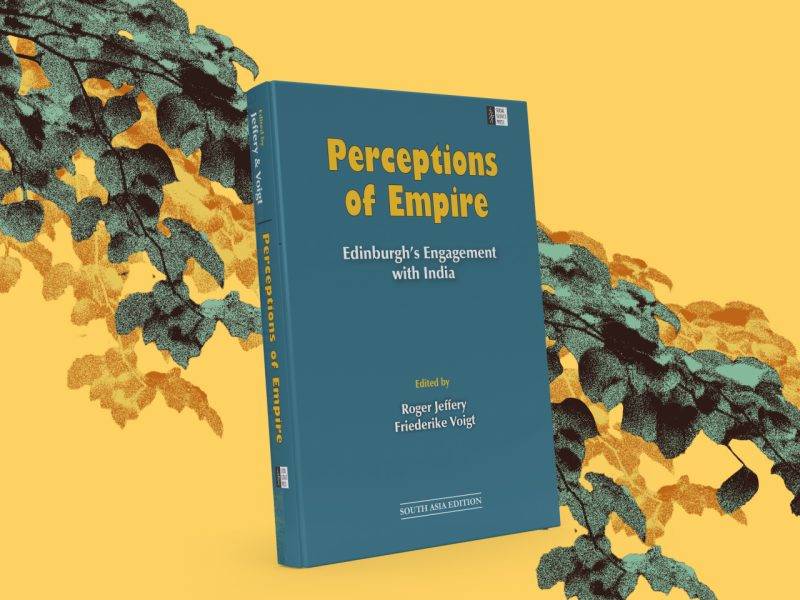
Perceptions of Empire recovers these forgotten encounters through voices that crackle with life in first-hand accounts revealing how one city’s relationship with India transformed across generations. Early wonder curdled into Victorian anxiety. Hostility eventually fractured, making space for genuine dialogue. Empire wasn’t monolithic; it was messy, contested, evolving.
In this talk the editors will share discoveries from three hundred years of archival intimacy, closing with an audience Q&A.
Speakers
Roger Jeffery
Emeritus Professor, Sociology of South Asia, University of Edinburgh
Roger Jeffery is Emeritus Professor of Sociology of South Asia at the University of Edinburgh, where he taught from 1972 to 2024. His work spans north Indian society, health policy in South Asia, and the historical footprint of India in Edinburgh. He is a co-founder of the Centre for South Asian Studies at Edinburgh and founded the Edinburgh India Institute in 2012.
Friederike Voigt
Principal Curator, West, South and Southeast Asian Collections, National Museums Scotland
Friederike Voigt is Principal Curator of the West, South and Southeast Asian collections at National Museums Scotland. Her work examines how museum collections reflect historical encounters, power relations, and individual perspectives within the British Empire, with a strong commitment to diversifying voices and collaborative engagement with South Asian communities.
Mario Vaz
Physiologist & Academic
Dr Mario Vaz is a physician, academic, and interdisciplinary scholar with a long and association with St John’s Medical College and its research and humanities initiatives. He retired as Head of the Department of Physiology, where he made significant contributions to undergraduate and postgraduate teaching and research, and also as Head of the Department of Humanities and History of Medicine, which he helped shape into a vital space for engaging medical students and professionals with questions of ethics, history, society, and values in medicine. He played a key role in developing and nurturing the Maj. Gen. S. L. Bhatia History of Medicine Museum, integrating the history of medicine into teaching, public engagement, and institutional reflection, and consistently emphasised medicine as a social and ethical practice, fostering dialogue between biomedical science, public health, history, and the humanities. Following his retirement, Dr Vaz continues to be associated with academic and public conversations on medical education, ethics, and the humanities in health.
Upcoming events in Bangalore International Centre