The Many Pasts of Panipat, 1761 - The 8th Prof. Satish Chandra Memorial Lecture
Details
Oct 13 2026 to Oct 13 2026 6:30 p.m.
EVENT HAS ENDED
Where
Bangalore International Centre
7 4th Main Rd, Stage 2, Domlur 560071
Event Description
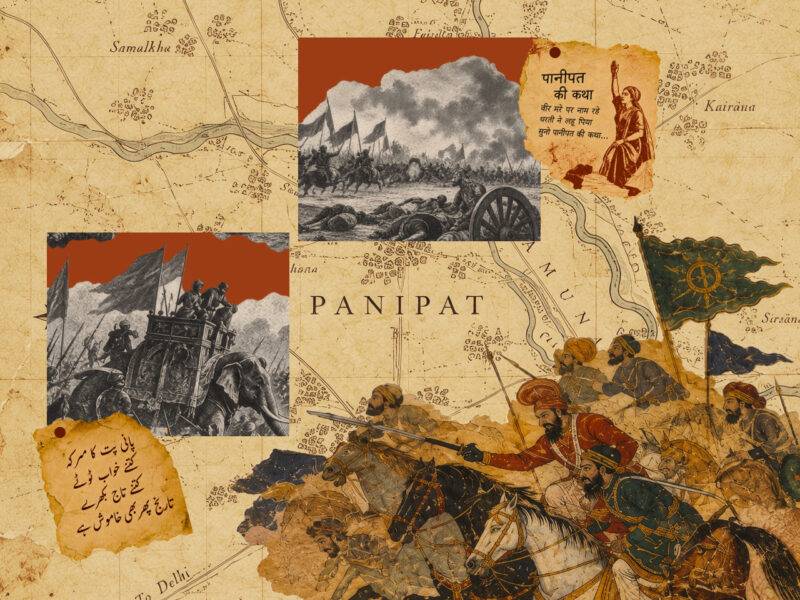
A great “what if?” moment in Indian history, the Third Battle of Panipat in 1761 has produced martyrs, ballads, and endless partisan debate. This lecture examines how its retelling, across school textbooks, Hindu nationalist historiography, and cinema, has flattened a complex event into a tale of heroes and villains. It raises the question, whose Panipat are we really remembering?
The vernacular primary sources tell a different story: where popular memory insists on certainty, they equivocate, contradict, and complicate. A micro history of the battle reveals multiple pasts, remembered and recorded by multiple men. This lecture makes a case for why critical historians cannot ignore this plurality while narrating the event to a generation raised on a communal rendering of Indian history.
About Satish Chandra
Professor Satish Chandra (1922-2017) was one of India’s foremost historians and a towering authority on medieval Indian history. Over a distinguished four-decade career, he taught at leading universities across the country, including Allahabad University, Aligarh Muslim University, Delhi University, Rajasthan University, and finally Jawaharlal Nehru University (JNU). At JNU, he co-founded the Centre for Historical Studies alongside S. Gopal, Bipin Chandra, and Romila Thapar. As Chairman of the University Grants Commission, he went on to help shape academic life across India, and in 1985, deeply committed to intellectual exchange, he co-founded the Society for Indian Ocean Studies. A thoughtful historian who brought a Marxist approach to the field, Chandra’s work bridged eras and ideas, leaving an enduring mark on the study of India’s past.
Alok Chandra
Speaker
Anirudh Deshpande
Head, Department of History, University of Delhi
Professor Anirudh Deshpande is a distinguished scholar of modern Indian history and currently serves as Head of the Department of History at the University of Delhi, a position he has held since September 2025. After graduating from St. Stephen’s College in 1984, he pursued research in Modern Indian History at the Centre for Historical Studies, Jawaharlal Nehru University, completing his M.A., M.Phil. and Ph.D. He began his teaching career at Motilal Nehru College before joining the University of Delhi, and has also served as visiting faculty at Vienna University, North Bengal University and Aligarh Muslim University. His research spans military history, colonial politics, historiography and media studies. His major publications include British Military Policy in India, 1900–1945 and King, Country and War: Ideology, Memory and Written Indian History, c.1600–1900, which examines how historical narratives have shaped Indian historical consciousness.
Upcoming events in Bangalore International Centre