The Many Worlds of Kannada Literature - ‘Incorrigibly Plural’ - Texts and Trajectories
Details
Jun 14 2026 to Jun 14 2026 11:30 a.m.
EVENT HAS ENDED
Where
Bangalore International Centre
7 4th Main Rd, Stage 2, Domlur 560071
Event Description
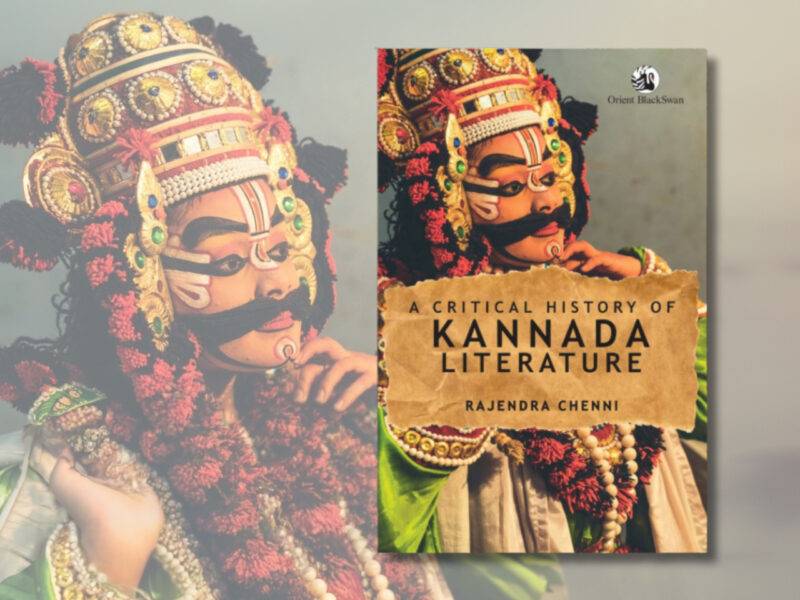
The panel will discuss Rajendra Chenni’s recent book, A Critical History of Kannada Literature, which traces the many aesthetic, socio-historical and linguistic worlds in the development of Kannada literary traditions from ancient times to the contemporary period. Beginning with the earliest extant works, it takes us through the radical interventions of the Vachanakaras of the twelfth century to the Kannada renaissance, literary modernity and contemporary writings. It deals with the negotiations of Kannada literature, its continuities and disjunctures, conformity and dissent with the larger pan-Indian and bhasha literary, religious, political and philosophical traditions. The discussion will look at the chapters on drama and theatre, women’s writing, literary criticism, folk literature, Dalit writings, and popular literature, highlighting the rich diversity of literary expression in Kannada. The book is the first in a series of critical histories of bhasha literature published by Orient Blackswan.
The discussion will be followed by Q&A with the audience.
Image Credits
Poster, Thumbnail and Header: Book cover image, ‘A Yakshagana artist prepping for a performance’. Photo by Sahana MS, 13 February 2020. Cover design by Jyothsna PS.
Speakers
Rajendra Chenni
Director, Manasa Centre for Cultural Studies, Shivamogga
Rajendra Chenni is a bilingual writer with 21 books in Kannada and 7 in English. Acknowledged as a leading critic, his writings combine theoretical rigour with insightful close readings and interpretations of literary, cultural and political texts. He has played a seminal role in bringing a paradigm shift from a textualist approach to a cultural studies framework in Kannada criticism. His critical essays on both the canonical and marginalised writings have made a meaningful contribution to literary studies. He has received several honours and awards including the Karnataka Sahitya Akademi Lifetime Achievement Award, GS Shivarudrappa Award, Kuvempu Bhasha Bharati Lifetime Achievement Award and the Kannada Rajyotsava Award (2025), the second highest civilian honour in Karnataka.
His works in English include Speaking for Someone: Essays on Contemporary Society and Culture; Of Many Worlds: Essays on Modern Kannada Literature; Traditions of Modernity; State Matters: Kannada Sub-Nationalism and State Formation; Speaking for Karnataka (co-editor); The Vachanas of Sarvajna (general editor) and Mudtown (a novel).
As a writer activist, he has participated in people’s movements for communal harmony, environmental protection and social justice. Formerly Professor of English, he is presently Director, Manasa Centre for Cultural Studies, Shivamogga.
EV Ramakrishnan
Former Professor, Poet & Critic
EV Ramakrishnan is a well-known critic in Malayalam and English, besides being an Indian English poet and translator. Formerly Professor, Dean and Professor Emeritus of Central University of Gujarat, he has published critical works in Malayalam and English.
Some of his path-breaking works include Making it New: Modernism in Malayalam, Marathi and Hindi Poetry; Indigenous Imaginaries: Literature, Region, Modernity; Bakhtinian Explorations of Indian Culture: Pluralism, Dialogue and Dogma through History (co-edited); and Locating Indian Literature. His poetry collections include Terms of Seeing: New and Selected Poems, and A python in a snake park.
He is the editor of We Speak in Changing Languages: Indian Women Poets 1990-2007; Literary Criticism in India: Texts, Trends and Trajectories (2021); and A Cultural Poetics of Bhasha Literatures: In Theory and Practice (2024).
EVR’s contributions to the study of Indian bhasha literatures have made a great impact on Indian literary criticism. He is the recipient of the Kerala Sahitya Akademi Award and the Odakkuzhal Award. He received the Sahitya Akademi Award for his Malayalam work, Malayala Novelinte Deshkaalangal.
Vanamala Viswanatha
Scholar & Translator
Prof. Vanamala Viswanatha is an award-winning literary translator and bilingual scholar, and has taught English for over four decades in premier institutions in Bengaluru. She has translated important ancient, medieval, and modern classics from Kannada into English. Her repertoire includes the translation of 12th-century women saint poets in Vachana (2012); the 13th-century poetic text by Raghavanka – The Life of Harishchandra in the Murty Classical Library of India series (Harvard University Press, 2017); Indira Bai, the first social novel in Kannada by Gulvadi Venkata Rao (2019, OUP); Kannada literary giant Kuvempu’s epic novel Bride in the Hills (Penguin Random House, 2024), and Vaddaradhane, a 10th-century Jaina text (Harvard University Press, 2026). She has also translated into English well-known Kannada writers such as UR Ananthamurthy, Sara Aboobacker, Lankesh, and Vaidehi. A Translation Fellow at Ashoka University, she is currently translating Lakshmisha Tolpadi’s meditative essays on the Mahabharata (Penguin Random House, 2026). Her groundbreaking essays in the area of translation studies have shown new directions in the translation of bhasha texts.
A Charles Wallace Trust India Fellow, Vanamala Viswanatha received the Best Translation award for Indira Bai in 2020, and for Bride in the Hills in 2025 from the Karnataka Sahitya Academy. She recently narrated the entire text of Bride in the Hills for the audiobook version. In 2025, she was conferred the Lifetime Achievement Award from Kuvempu Bhasha Bharati Pradhikara for her overall contribution to translation.
NS Gundur
Professor & Translator
Literary critic, translator and leading Indian researcher, Prof. NS Gundur is presently Professor and Chairman of the Post-Graduate Department of English, Tumkur University. He has written insightful essays on major works of the Kannada tradition. The recipient of a New India Foundation translation fellowship to translate DR Nagaraj’s Allamaprabhu Mattu Shaiva Pratibhe from Kannada, this work recently published by Permanent Black and SUNY Press has received global appreciation. The renowned scholar Sheldon Pollock has described the work as ‘a remarkable contribution to literary and historical scholarship.’Gundur has also received an Ashoka University translation fellowship.
Gundur has made significant contributions to the study of Indian literature, translation studies and Kannada cultural discourse and has published articles in national and international journals.
Upcoming events in Bangalore International Centre