The Living Cauvery - Exploring a Forgotten Aquatic Wilderness
Details
Jun 04 2026 to Jun 04 2026 6:30 p.m.
EVENT HAS ENDED
Where
Bangalore International Centre
7 4th Main Rd, Stage 2, Domlur 560071
Event Description
Less than one percent of the Earth’s surface is covered by freshwater habitats, yet these ecosystems support nearly half of the world’s fish diversity. They are also among the most threatened ecosystems on the planet.
The Cauvery basin, the second-largest river basin in peninsular India, is perhaps one of the most heavily utilized river systems in the country. Yet, despite immense ecological pressures, it continues to support a remarkable assemblage of wildlife — from well-known protected landscapes such as Bandipur National Park and Nagarhole National Park to lesser-known ecosystems like Mekedatu and Shivanasamudra, where aquatic species continue to thrive under increasingly threatened conditions.
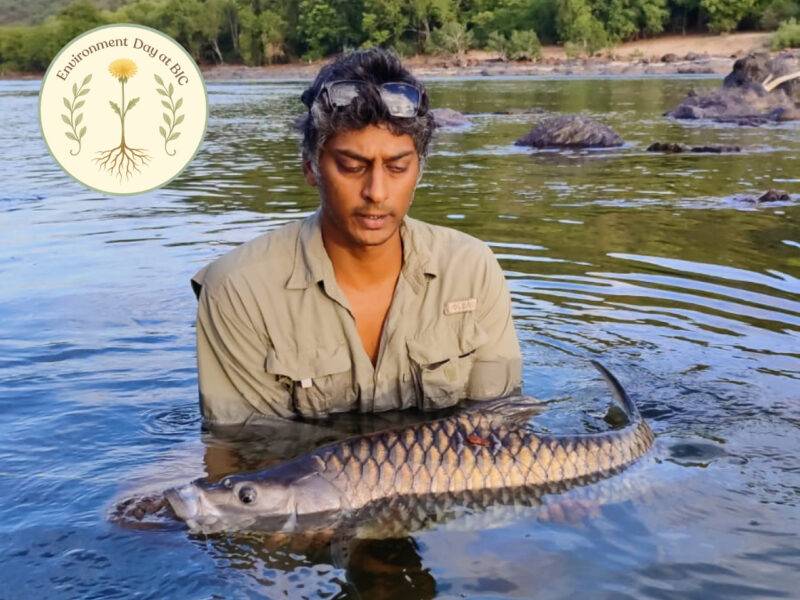
In this talk, Naren Sreenivasan from the Wildlife Association of South India presents a decade-long journey exploring and documenting the critical aquatic habitats of the Cauvery basin. From exploratory expeditions deep into the Moyar River valley, to radio-tracking large Mahseer in the Cauvery Wildlife Sanctuary, to rediscovering fish species once thought extinct, this talk offers a rare glimpse into one of India’s most overlooked wildernesses. Discover the Cauvery not merely as a source of freshwater, but as a living ecosystem.
The session will conclude with an audience Q&A.
Speaker
Naren Sreenivasan
Conservation Biologist
Naren Sreenivasan is a conservation biologist with the Wildlife Association of South India, a Bengaluru-based group that works to protect the Cauvery River and its wildlife. Over the past decade his focus has been on researching and promoting the Critically Endangered Humpback Mahseer as an ambassador species for river conservation. His work brings together science, community engagement, and a lifelong love for rivers. An avid angler himself, Naren has spent decades by the water—listening, observing, and learning from the people and species that depend on it. In this programme, he will share stories and insights from over ten years of fieldwork in the Cauvery basin.
Upcoming events in Bangalore International Centre