Ajanta Rediscovered - M R Srinivasan Memorial Lecture
Details
May 21 2026 to May 21 2026 6:30 p.m.
EVENT HAS ENDED
Where
Bangalore International Centre
7 4th Main Rd, Stage 2, Domlur 560071
Event Description
The Ajanta Caves hold the greatest surviving body of ancient Indian murals. Until Benoy Behl, they were the only known examples of ancient India art.
Behl began his career photographing nuclear power installations under Dr M R Srinivasan’s leadership at the Atomic Energy Commission. That same eye, trained in the darkness of reactor buildings, looked into ancient caves and changed how the world sees Indian art. He captured paintings hidden in ancient temples and caves, shrouded for centuries in darkness too deep for conventional photography. Behl developed a low-light technique that revealed an unbroken lineage of painting running from Maharashtra through Badami, the Pallava paintings of Pannamalai, the Brihadisvara murals, and northward to the monasteries of Alchi and the Himalayas. His work overturned the belief that India had no continuous tradition of painting from ancient times.
In this illustrated lecture, Behl traces that very lineage, with images that make the argument that India’s tradition of painting is among the greatest in the history of art. He will then take questions from the audience.
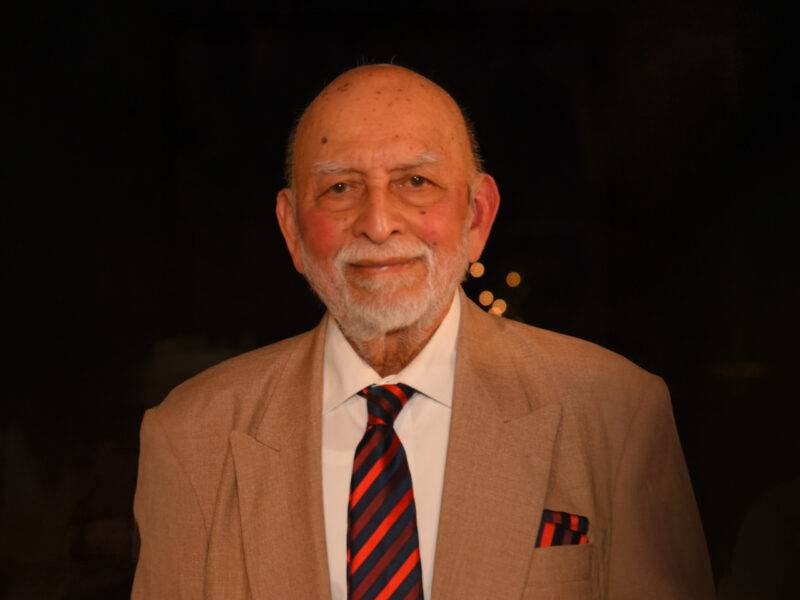
About Dr. M.R. Srinivasan
Dr. M.R. Srinivasan (1930–2025) was widely regarded as the chief architect of India’s nuclear power programme, beginning his career at the Department of Atomic Energy in 1955 under Dr. Homi J. Bhabha, and contributing to landmark projects including Apsara, India’s first research reactor, the Tarapur Atomic Power Station, as well as the Madras Atomic Power Project. An alumnus of UVCE, Bengaluru and McGill University, Canada, he served as Chairman of the Atomic Energy Commission (1987–1990), and founded the Nuclear Power Corporation of India in 1987. A key policy figure, he served on the National Security Advisory Board, played a pivotal role in the Indo–US nuclear agreement, advised the IAEA, co-founded the World Association of Nuclear Operators, and participated in the Pugwash Conferences as a lifelong champion of peaceful nuclear energy. He authored From Fission to Fusion: The Story of India’s Atomic Energy Programme, was honoured with the Padma Shri (1984), Padma Bhushan (1990), and Padma Vibhushan (2015), and remained active in environmental and community initiatives in the Nilgiris until his passing in May 2025.
Presented by:
Sharada Srinivasan
Professor, National Institute of Advanced Studies
Speaker
Benoy K Behl
Art Historian, Filmmaker and Photographer
Over nearly five decades, Benoy K. Behl has photographed more than 53,000 images of Asian monuments and heritage, made 146 documentary films, and presented exhibitions in 74 countries. and inaugurated by leading global dignitaries, including HH the Dalai Lama. His films, such as the series on The Paintings of India, The Sculpture of India, and Spectacular India, have been nationally telecast in India and internationally. His work has been featured by National Geographic and covered by BBC World News
His low-light photography of ancient Indian murals established that India has a continuous tradition of painting from antiquity through the medieval period. His books include The Ajanta Caves (Thames & Hudson) and The Art of India. He has lectured at over 250 institutions across 36 countries, held the Limca Book Record as India’s most travelled photographer and art historian, and his work has been archived in the Arctic World Archive. He is currently Adjunct Professor at the National Institute of Advanced Studies, Indian Institute of Science, Bengaluru.